Rhodes Old Town is one of the places I would always recommend exploring on foot. You can wander without a plan and discover something around almost every corner, but having a map makes it much easier to understand what you are actually looking at.


The Medieval City of Rhodes
The Medieval City of Rhodes is a UNESCO World Heritage Site. The Knights of St John occupied Rhodes from 1309 to 1523 and transformed the city into a fortified stronghold. The historic centre is still enclosed by roughly four kilometres of fortifications.
What makes the old city so interesting is the mix of periods and influences. Gothic buildings associated with the Knights sit alongside later Ottoman architecture, houses, shops, squares and streets that are still part of a living city.

Street of the Knights
The Street of the Knights is one of the most memorable parts of the city. The stone street and the historic inns connected with the different divisions of the Order make it one of the clearest surviving examples of the Knights’ presence in Rhodes.

Palace of the Grand Master
The Palace of the Grand Master is one of the defining landmarks of Rhodes Old Town. Together with the Street of the Knights and the former Great Hospital, it forms part of the historic upper town associated with the Knights.

Socratous Street and the lower town
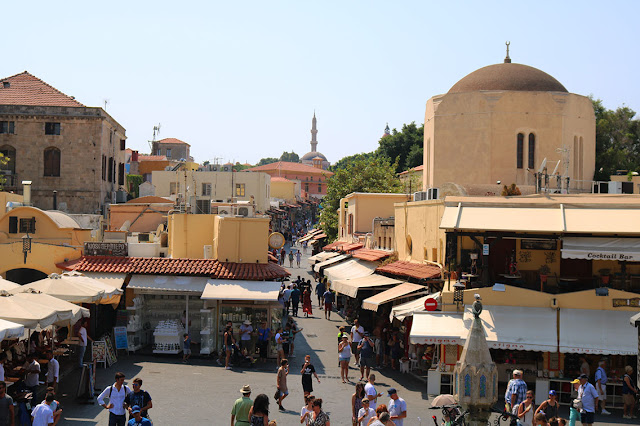
As you move through the lower town, the atmosphere becomes busier and more commercial. Socratous Street, Ippokratous Square and the surrounding lanes are filled with shops, cafés and restaurants, while historic buildings and traces of the Ottoman period remain woven into the streetscape.
The medieval walls
The fortifications were repeatedly maintained and strengthened during the period of the Knights. Some sections became exceptionally substantial as the city adapted to changing methods of siege warfare.


Before you visit
Museum, palace and fortification access can change by season, so check current opening information before planning your day around a particular attraction.
